
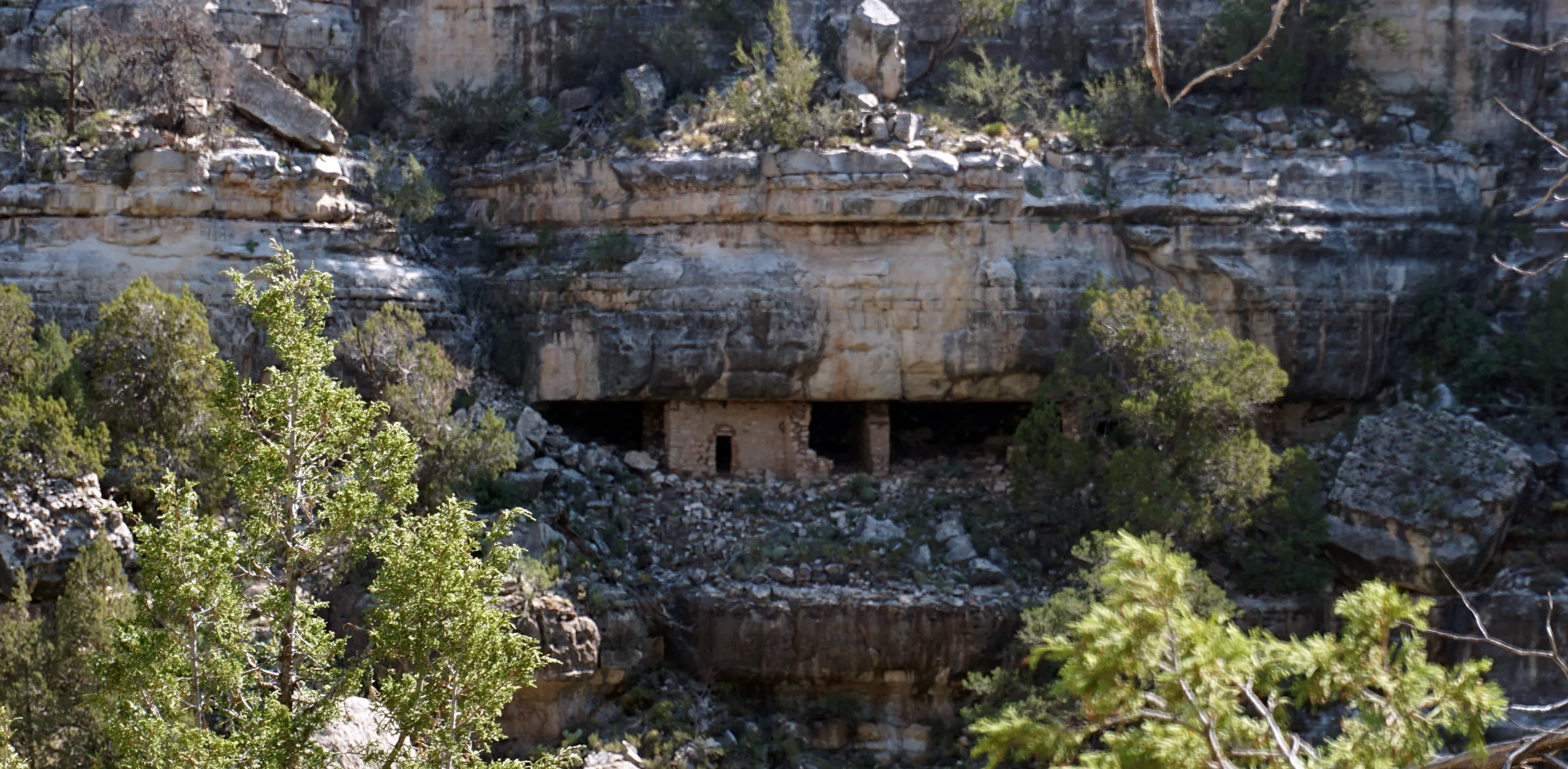
You say Flagstaff; I say Grand Canyon. Most tourists do. Flagstaff, Arizona is a popular place to stay when visiting Grand Canyon National Park. But there’s more to Flagstaff than its proximity to The Grand. Flagstaff has a lot of grand in its own right including two hidden gems many travelers overlook- Walnut Canyon National Monument and Elden Pueblo Heritage Site.
What makes Walnut Canyon National Monument and Elden Pueblo Heritage Site hidden gems? Let’s take a look.
Walnut Canyon National Monument
Located on historic Route 66 in Flagstaff, Walnut Canyon is what remains of the Sinagua community that inhabited Walnut Canyon from 1070 CE – 1275 CE. (The Sinagua also inhabited nearby Elden Pueblo.)
In a hurry to reach Grand Canyon National Park and beyond, many travelers don’t think about stopping at Walnut Canyon. In fact, we didn’t even know Walnut Canyon National Monument existed when we made our first trip through Flagstaff years ago. Luckily, I discovered it when planning our 2025 road trip.
For more about the Sinagua culture who lived in Walnut Canyon and Elden Pueblo, visit Cultural and Natural Overview of Elden Pueblo.
Walnut Canyon Basic Information
Entry Fees

As of 2026, the entry fee for Walnut Canyon National Monument is $25.00 per private vehicle. For additional fee information and to stay updated about fee changes visit the park’s website.
If you plan to visit multiple national parks and/or other federally managed land sites during your trip, you may save money by purchasing the America the Beautiful Pass instead of paying individual site entry fees. We use our America the Beautiful Pass every year.
Hours of Operation
The park is open every day from 9:00 AM – 5:00 PM with early closures on Thanksgiving, Christmas, and New Years Days. If you plan to hike, there are specific times you must be off of the trails before the park closes. You can find more information on the park’s Plan Your Visit page.

Walnut Canyon Trails
There are two trails at Walnut Canyon National Monument that flaunt grand views, but only one gets you up close and personal to the monument’s most popular attraction- the cliff dwellings. Which trail you choose depends upon your physical abilities and the amount of time you have to spend at the monument.
Always carry plenty of water on any hike. There is a bottle filling station available at the visitor center.
Rim Trail
The Rim Trail is a fairly flat, easy .7 mile (1.1 km) walk along the forested canyon rim. On the Rim Trail, you’ll see a traditional Sinagua pit house dwelling, historic sites, and get some spectacular canyon views. Although you can see cliff dwellings in the distance, you will not get up-close views on the Rim Trail.

Because the trail’s first section is paved and relatively level, the Rim Trail is accessible– at least in part. Consult a park ranger for more information before heading out on the trail.
I love to find accessible trails in parks. Everyone should have access to the best sites and views. Although, there are no close-up views of the cliff dwellings, Rim Trail gives a good overview of Walnut Canyon National Monument.
Island Trail
Be prepared for a lot of steps (approximately 273) on the moderate-challenging 1-mile (1.6 km) loop trail. Walnut Canyon’s 7,000-foot elevation may make it even more challenging for some. We had several days to acclimate to the elevation before getting to Walnut Canyon.

There are over 20 cliff dwellings to see along the Island Trail. Interpretive signage is helpful to understand the history of the Sinagua culture and purposes of the structures. The trail also highlights native plant species and provides information about how the Sinagua people used them.
When I think I have bigger fish to fry later in the day, I find myself not focusing in the moment. Wupatki National Monument was my biggest fish the day we stopped at Walnut Canyon. (I’ll post about Wupatki soon.) It was only after I forced myself to stop and refocus that I truly appreciated Walnut Canyon National Monument.

I am fascinated by Ancestral Puebloan architecture. The Sinagua dwellings have many similar features to the Chacoan structures in New Mexico that I love so much; the T-Doors being my favorite.
Find out more about T-Doors and the Ancestral Puebloans in my posts The Best Ruins in New Mexico- Chaco Canyon and (Not) Aztec Ruins National Monument.

Look for a plant called “Mormon Tea” along the trail and find out how the Sinagua and Mormon settlers used it.
Turns out Mormon Tea contains ephedra. The drug ephedrine is derived from natural ephedra (like that found in Mormon Tea). Ephedrine is one of the main components of illegal methamphetamine. Can you believe that?
Just remember what goes down, must come up. Have plenty of water and energy. This trail might be paved, but it’s a doozy of a climb back up. There are few places to sit on the trail, but my husband found every one of them. Having a place to sit is always an important trail feature for him.
Elden Pueblo Heritage Site
Not far from Walnut Canyon National Monument in the Coconino National Forest, you’ll find the inconspicuous Elden Pueblo Heritage Site. Don’t look for a large welcome sign. There isn’t one.
Visiting Elden Pueblo is free and open to the public for self-guided tours. For information about special events visit the Forest Service Elden Pueblo page.

Upon first glance, you may think there’s not much to see here. (That’s what my husband thought and I’ll admit, I did, too.) Keep looking. There’s more to see than greets the eye.
Elden Pueblo is an active archaeological site. Digs are ongoing and teach the public how to uncover ancient secrets by using good archaeological practices. I wish I could attend one of these events. Archaeology is such an interesting field!
The easy .35-mile (.6 km) trail through Elden Pueblo is more of a nature walk suited for enjoying your morning coffee and indulging in quiet reflection. At least for us it was. We had a busy day ahead of us, and it was nice to start off with a relaxing trail. I can’t imagine Elden Pueblo gets very busy outside of special events and school field trips.
Pick up a detailed interpretive guide at the trailhead. You can also get the guide by scanning the QR code on Elden Pueblo’s welcome sign or visiting Elden Pueblo’s website.
A unique feature of Elden Pueblo is the community plaza at Stop 11 on the trail. Read about this rare American Southwest find in the interpretive guide.

See the cars behind the community plaza in the photo above? That’s how close Elden Pueblo Heritage Site is to civilization. I was surprised to find a gas station across the street, RV parks and neighborhoods next door, and a shopping mall just a mile away. Yet, Elden Pueblo Heritage Site remains a “hidden gem” for Flagstaff visitors.
What Did I Think About Walnut Canyon and Elden Pueblo?
I think Walnut Canyon National Monument and Elden Pueblo are definitely worth visiting if you are traveling through Flagstaff, Arizona. You can see both in 3 hours (less if you skip Walnut Canyon’s Island Trail) and quickly move on to your next adventure. Why not see everything you can, especially if there’s a chance you may never pass this way again?
Sunset Crater and Wupatki National Monuments were our next adventures, and they were dang good ones! I can’t wait to tell you about those.


We saw Walnut Canyon, Elden Pueblo, Sunset Crater, and Wupatki in one day and made it to Panguitch, Utah that night. What a trip!
What did we do in Panguitch, Utah? Find out here.
What Did My Husband Think?

Gary hands down liked Walnut Canyon National Monument better than Elden Pueblo Heritage Site. In his opinion, Elden Pueblo was just “a good place to get out and stretch your legs.” On the other hand, he thought Walnut Canyon was “impressive” and a must stop along Route 66. He especially liked the cliff dwellings and the places to sit on the trail.
From the Library

I think it’s important to get youth invested in our national parks and reading is a great way of doing that. Walker of Time won the award for best Young Adult fiction in 1994 and is still a good read today. For anyone visiting Walnut Canyon National Monument with teens, I recommend this book to be part of your trip planning to get them more interested in what they’ll see.
I enjoyed reading it myself.
Comments