
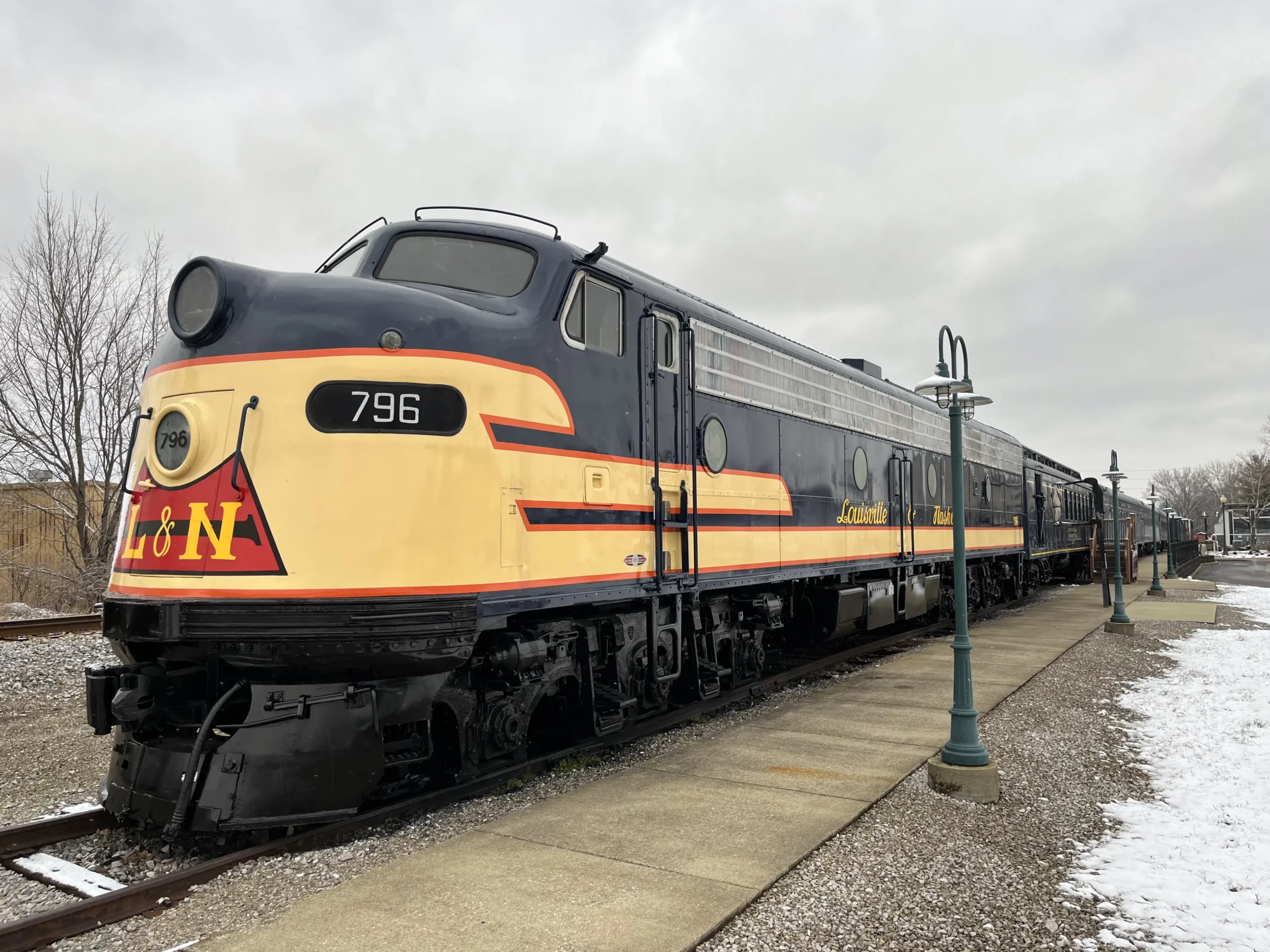
Let’s get this out of the way. The Historic Railpark and Train Museum does NOT offer train rides.
On a nasty winter day in 2025, I did a quick internet search for hidden gem (indoor) attractions within an hour or so from home. That’s how I discovered the Historic Railpark and Train Museum in Bowling Green, Kentucky.
When I called to make sure the museum was open and tickets were available, the employee laughed. All of the tickets were available. The day was that nasty. We were the only fools who wanted to get out. Great for us, because we had an even better time with the Historic Railpark and Train Museum all to ourselves.
For museum and tour ticket information including hours of operation, visit the Historic Railpark and Train Museum website.
Railpark and Train Museum Location
The Historic Railpark and Train Museum is conveniently located approximately 4 miles (6.4 km) from the intersection of Interstate 65 and Hwy. 234, making it an easy stop if you are traveling south to Tennessee or north toward Louisville, Kentucky.

When Was the Depot Built?
I suspected this depot, built in 1925, was not the original and I was right. The first depot was constructed in 1859, two years before the Civil War began. The Confederate Army occupied the city of Bowling Green and maintained control of the railroad until 1862 when the Boys in Blue arrived.
When it became clear the Union Army was going to push the butternuts out of Bowling Green, the Confederate Army burned the depot and the trains. The Union soldiers wasted no time in rebuilding the second depot to stand on this site.
Controlling the railroads was key to the Union victory over the South.
After the war, the Union-built depot fell into disrepair and would not be replaced until 1925. There’s an interesting story behind the reason why. Find it in the museum.
When the train station became defunct in 1979, the depot fell into a forgotten state. Almost two decades later, a non-profit volunteer group began a massive restoration and created the Historic Railpark and Train Museum.
Inside the Train Depot
Museum
You can visit the museum before or after your train tour, but make sure you leave plenty of time to do so. The railpark website recommends setting aside 45 minutes to explore the museum. Maybe that’s enough for some (like my husband), but I needed twice that. I didn’t get it, but I needed it.
There is a theater where you can watch a video about the evolution of the railroad. Watch it when you need a break from wandering around the displays. My husband enjoyed the break. I preferred the wandering.
My Favorite Museum Exhibits
These are the exhibits I enjoyed the most, but there are an overwhelming number to choose from. If you’re into Civil War history and Abraham Lincoln’s influence on the railroads, there’s that. If you’re into the mechanical development of trains, there’s that too. If you want to know more about the roles of engineers and porters and such, head to the second floor. You’ll find plenty of exhibits there.
Segregation- the African American Experience
Learn all about the African American railroad experience on the first floor of the museum. Public access did not mean equal access to passenger trains for African Americans in the Jim Crow era. This exhibit does a great job exposing that history as well as the major contributions that black Americans made to the success of the railroads.

Make sure you take a look at the “Colored Waiting Room”. This is where African American passengers were required to wait for their trains prior to desegregation. Notice the shocking difference between this room and the grand depot designated for white passengers.
Dining Cars and Fred Harvey
If you’ve visited other railroad museums, you’ve probably heard of Fred Harvey and how his passenger train experiences revolutionized American tourism. His onboard restaurants and rail-side hotels became attractions in their own right. Learn all about Fred Harvey and his employees known as the “Harvey Girls” in the dining exhibit on the second floor.

The Dining Car was my favorite part of the museum.
Hobos
Don’t miss the hobo exhibit tucked away in the back corner of the second floor. I had a lot of preconceived and inaccurate notions about hobos. What a unique subculture!


Hobos had their own language, customs, and social hierarchy.
Model Train Room
Take a few minutes to visit the model train room located next to the gift shop. Little kids will really enjoy watching the trains rolling around the tracks. Big kids will, too.

Passenger Waiting Area
The gorgeous tile floor and brown tile wainscoting in the passenger waiting area are authentic. They were restored in the 1990’s and continue to be proud reminders of the depot’s original grandeur. The paintings at the top of the room were not added until the depot’s restoration. These massive installations are exquisite interpretations of railroad history.

My favorite part of the passenger waiting area was the ticket booth. I stood there and imagined what it would have been like as a woman in the 1930’s dressed in a skirt suit, cloche hat, and white gloves anxious to buy my ticket for the first leg of a trip to somewhere new and exciting. The Grand Canyon, perhaps.
And then the concert began. My husband discovered the phenomenal acoustics of the passenger area and couldn’t resist belting out Johnny Cash’s “Hey Porter” to an audience of no one. He was so loud I was afraid the staff down the hall would call security. Since we were the only visitors, maybe they didn’t mind. Or maybe they enjoyed the surprise performance. I didn’t ask.
Gift Shop
There are lots of quality souvenirs in the gift shop. Sadly, we’d already finished our tour when I discovered the engineer caps for sale. Bummer. If you want some really insta-worthy pics, get a cap! I’m tempted to go back and get one. Our future travels will likely include a few more railroad museums and train rides. My husband has four generations worth of ties to the railroad, so he’s always had an interest in trains.

Is this not the coolest photo? My husband’s grandfather is pictured here working on the railroad in the 1930’s (maybe 40’s?). My husband’s father, uncle, and brother-in-law spent their careers working for the Norfolk Southern Railroad and his nephew currently works on Norfolk Southern’s derailment crew.
The Train Tour
As I mentioned in the beginning, the Historic Railpark does not offer train rides. Instead, the tour focuses on the interior design and operation of the train. I loved seeing how the passenger train sleeping and dining cars differed between economic classes.
But the mail car was the big highlight for me. Our tour guide was a young college student with family ties to the Louisville and Nashville (L&N) Railroad. One of his family members operated a mail car and another provided hospitality services. He was very educated about the train and its history of segregation.

Regardless of what tour guide you have, ask for a demonstration of how mail was picked up while the train was on the move. Amazing!
Of course, sitting in the engineer’s seat was fun, but there’s no way I’d want to steer that iron horse. Or be so uncomfortable! The engineer’s space was stark and devoid of any luxuries. Not even a cup holder! Where was the engineer expected to put his Stanley?

My Only Disappointment
I was disappointed in one thing at the Historic Railpark and Train Museum. The train tour was way too rushed. I missed much of what I’d hoped to see. There were lots of interesting artifacts and signs displayed throughout the train, but before I could finish looking in one car, our guide had already moved to another (with my husband in tow) and begun his next presentation.
I’m the caboose in our relationship. On a trail, in the grocery store, it doesn’t matter. I’m always bringing up the rear.
I’m giving our guide the benefit of the doubt and blaming the day’s freezing temperature for the rush. You could have hung meat in that train!
Should You Visit the Historic Railpark and Train Museum?
Absolutely. The railroads were arguably the greatest influence in shaping America into our contemporary nation. From their integral role in the Civil War and western expansion to their creation of a dynamic tourism industry, the railroads are our American heritage. So, yes, the Historic Railpark and Train Museum is worth a visit whether you’re a train enthusiast or not.
Nearby Attractions
The National Corvette Museum
Bowling Green’s most popular attraction is the National Corvette Museum. I haven’t been yet, but I hear it’s worth a visit. An interesting feature of the museum is the sinkhole. In 2014, a sinkhole opened up in the museum and several historic Corvettes were plunged into its depth. Some of the cars were retrieved and restored to near perfect condition.
The sinkhole was a result of destabilized karst topography. Don’t know what that is? Visit the next two sites to find out.
Lost River Cave
Another popular Bowling Green attraction is Lost River Cave located just minutes from the Historic Railpark and Train Museum. I recently took a boat tour and left with mixed feelings. I’ll write about my experience soon. With that being said, I’d recommend Lost River for any first-time cave visitor and especially those who can’t walk for long periods of time.
Mammoth Cave National Park
Mammoth Cave National Park, just 30 miles (51 km) from Bowling Green, is a must visit if you are traveling through this area of Kentucky. Mammoth Cave is the longest mapped cave in the world and an astounding natural wonder. Find out more about this close-to-my-heart park in my article One Big Day in Mammoth Cave.
From the Library

What a charming book! A work of historical fiction, author Joaquin Andre Hawkins tells the story of a real dog named Owney who traveled the rails and found homes in mailrooms around the nation. I purchased the book in the Historic Railpark and Train Museum gift shop.