
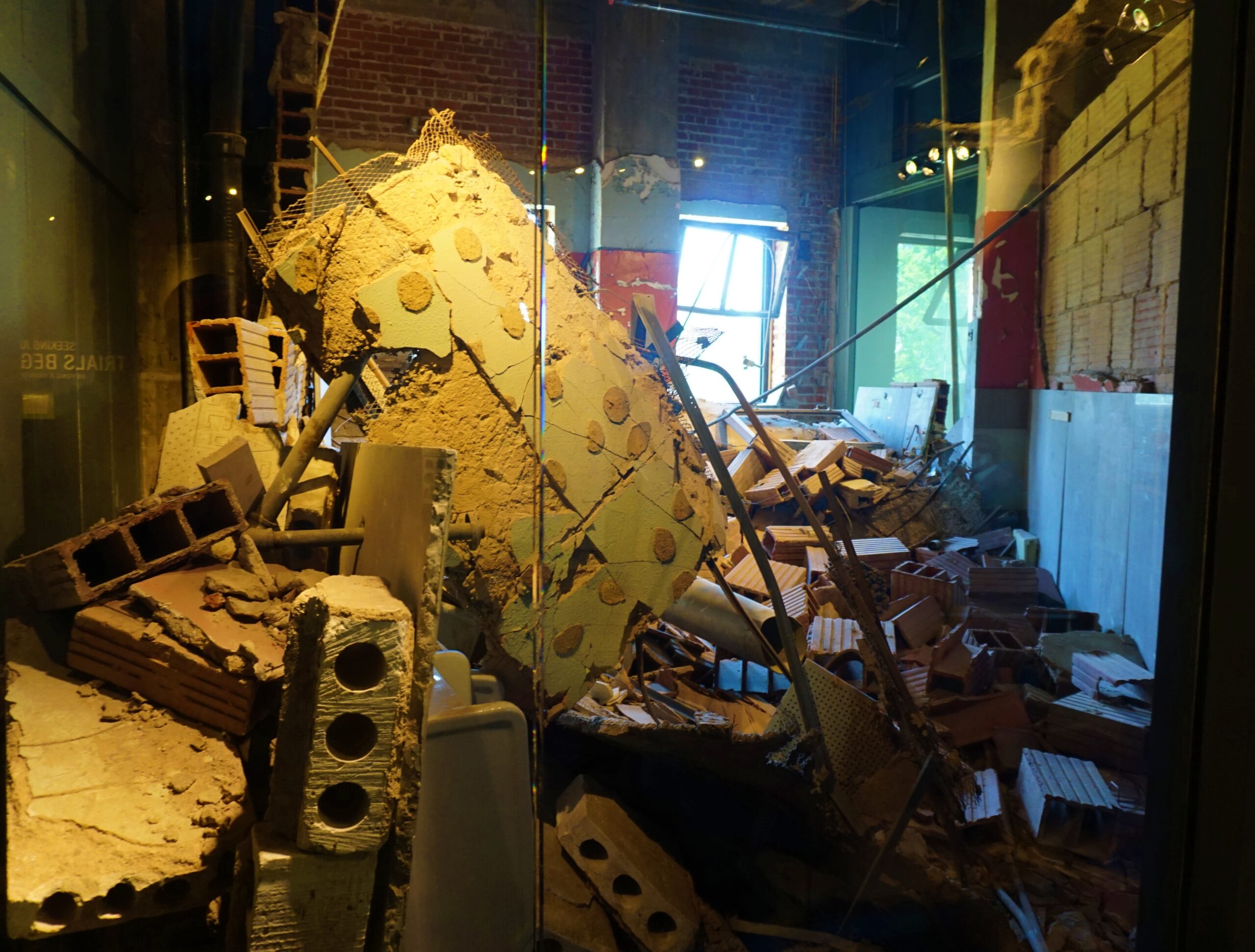
Many of you reading this remember the tragedy that occurred in Oklahoma City, OK on April 19th, 1995, at 9:02 AM. Many of you are too young to remember.
No matter how much you remember, don’t remember, or wish you could forget, you should visit Oklahoma City National Memorial. It’s not just a memorial of the tragic events of April 19th, 1995, it’s a memorial of courage, hope, and the power of community.
To this day, the Oklahoma City bombing of the Alfred P. Murrah Federal Building ranks as the deadliest act of homegrown terrorism in the United States. I remember watching the horrific, numbing aftermath for weeks on television and then flipping casually through it for months on the news. My mind couldn’t wrap itself around the reality of what I saw, so I moved on with life and forgot.
Shamefully, I do remember that.

Until I became fascinated with all things National Parks, I had no idea there was a National Memorial commemorating the Oklahoma City bombing. I found it as a point of interest on the map as I was planning a Route 66 adventure through Oklahoma to New Mexico. After some quick research, I told my husband we had to see it.
Although, not directly on old Route 66, the Oklahoma City National Memorial is a short detour from Interstate 40 which parallels the historic highway.
As we arrived in Oklahoma City, I was looking forward to a break from the stress of traffic and seeing something new. Since the Memorial is a National Park Service site, there was a Junior Ranger badge in it for me, too. That’s always a plus.
But the almost 3 hours we spent at the Memorial in no way left me refreshed. By the end of our visit, I was exhausted and emotionally bereft. Everything I saw and felt was engraved on my heart. I knew I’d never forget. And I knew that was the point.
For information about visiting the Memorial, including price and hours of admission, visit the Oklahoma City National Memorial website.
Please, visit the Memorial if you have the chance. It’s called a National Memorial for a reason. The Oklahoma City terror attack didn’t just affect the city or the State of Oklahoma. It affected a nation. A nation responded and set an example that would be relied upon just six short years later on September 11, 2001.
Is the Oklahoma City National Memorial disturbing? Yes. Sad? Yes. Worth it? Absolutely.
Here’s an overview of what you will experience at this emotionally charged and provocative site.
The Tribute Fence
As you walk to the entrance of the Memorial, you’ll notice the fence surrounding the property full of mementos paying tribute to the victims, heroes, and survivors of the Oklahoma City bombing.

Take a few minutes to look at the items tied to the fence, tied to the suffering. The fence is a museum in itself. One that sets the tone for what you’re about to experience behind it.
Take a Self-Guided Tour of the Museum
The architects and designers of this Memorial did everything right and they did it with a bang. Literally.
Unless you were on-scene, you’ll never know what it was truly like to be in downtown Oklahoma City on April 19, 1995, but the Memorial does its best to give you the slightest idea.

Think you’re prepared? You’re not.
When you enter the museum, you are first brought to a room where you hear the original recording of the Water Resources Board meeting beginning at 9:00 AM on April 19, 1995. The meeting doesn’t last long.
A sudden violent explosion stops time and rocks you to your core. If you don’t cry, you’ll want to.
And thus begins your tour.
The remainder of the museum is like no other I’ve visited. Although there are lots of plaques you can read describing the incident, there is also an interpretive film, along with virtual reality exhibits, and unique opportunities to listen to the personal interviews of survivors, witnesses, responders, and family members of the victims.

Of course, you’ll also learn more about the perpetrator, Timothy McVeigh and his co-conspirator, Terry Nichols. Thorough accounts of their arrests, investigations, and prosecutions are on display for those with the fortitude to view them. My fortitude was lacking, the evil incomprehensible.
Especially interesting to me were the exhibits showcasing items found in the wide radius of destruction. The most impressive to me were the ones found intact like the clock in the photo above registering the exact time of the blast and the still full coffee pot in the photo below. Astounding.

I’m still in awe of all I saw in the museum. I was affected in ways words can’t express.
The Outdoor Memorial
The Outdoor Memorial is intended to inspire reflection, so plan to spend at least 30 minutes to an hour outside. Park rangers stand in quiet attention giving the space the respect it deserves, but they are willing to provide guidance to the site should you have questions.
Field of Empty Chairs
The Field of Empty Chairs is why the Oklahoma City National Memorial ended up on my itinerary. When I read about the sculptures’ significance, I had to see them for myself. Each chair represents one of the 168 lives lost in the bombing of the Alfred Murrah and Athenian buildings.
The smaller chairs are for the children. Remember, it’s okay to cry.

The Field of Empty Chairs was designed by German husband-and-wife architects Hans and Torrey Butzer and their associate, Sven Berg. Their proposal won an international contest held in 1996 calling for designs to be considered for an outdoor memorial to the victims of the Oklahoma City bombing. I’ve yet to see a memorial more striking.
Walk around. Read the names. Imagine the agony.
Notice the glass bases of the chairs. They are etched with the names of the victims and are illuminated every evening. Like I said- powerful.
Gates of Time and Reflecting Pool
The concrete and bronze Gates of Time on each end of the reflecting pool represent the minute before and the minute after the blast. The pool represents what happened in between- a sobering reminder of the fragility of life.

The design of the Gates of Time and Reflecting Pool is an impressive testament to the confluence of suffering and surviving. Take your time and process your emotions before leaving the Memorial. Reflection is the point and again, it’s okay to cry.
Survivor Tree and Rescuers Orchard
The Survivor Tree is an American elm that defied fate and remained standing after the blast. The tree was burned so badly, no one believed it could survive. But it did. In fact, the tree flourished. Now the beloved elm stands as a prominent symbol of hope.

In 1997, Mark Bays, a director of a division of the Oklahoma Forestry Service began propagating seeds from the Survivor Tree. He distributed seedlings from the elm to survivors, first responders, and victims’ relatives. Word spread and people from all over the country began requesting their own Survivor Trees.
You can purchase your own Survivor Tree seedling from Amazon. Part of the proceeds benefit the Oklahoma City National Memorial.
The Rescuers Orchard surrounds the Survivor Tree and was planted in honor of the emergency responders from Oklahoma City and across the nation. You’ll find three varieties in the orchard- Oklahoma Redbud, Chinese Pistache, and Amur Maple. The Oklahoma Redbud is in honor of the responders from Oklahoma. The other two non-native varieties were chosen in honor of emergency responders from other states.
Every element of the Oklahoma City National Memorial has deep significance.
Children’s Memorials
Don’t overlook the poignant children’s memorials found outside. Children worldwide were affected vicariously by this event. They heard about and saw the traumatic experiences of kids their ages. I’m sure many were afraid and wondered, “Could something like this happen to me?” Despite their shock and fear, they empathized and wanted to express their condolences. They wanted to do something to honor their peers.

This wall was created with tiles painted by children from around the world. Over 5,000 tiles were received by the city to become part of the Memorial. I wonder how many children have since visited and seen their contributions and their impact.
Junior Ranger Program
As I’ve said in other posts, the Junior Ranger program is an excellent way to get to know a national park. The Junior Ranger program at Oklahoma City National Memorial is no exception, but don’t make the mistake I did.
I’m always excited to earn a new Junior Ranger badge when I visit the parks. This time was different. As soon as I was handed the badge, I felt ashamed.
I’d just spent hours taking in the evidence of mass-murder and unfathomable destruction. To walk into the visitor center afterwards and request a Junior Ranger badge felt wrong. I wish I’d never done it. Instead, I should have waited until I got home and requested the badge by mail.
If you are participating in Junior Ranger, please consider waiting to request the badge. If you’re someone who likes to stamp the back of your badge with the date you visited, you can ask the Memorial staff to stamp it for you before returning it to you by mail. Most park staff are willing to do that. The date on the stamp is easily changed.
The Not Forgetting
Ask yourself when you leave. “Can I forget this? Can I ever un-feel it?” I think your answers will be the same as mine. But remember this:
The Oklahoma City National Memorial documents profound tragedy. It admonishes evil. Grieves pain. Mourns loss. Recognizes heroism and celebrates survival. But most importantly, it cherishes hope.
The next time you’re traveling Interstate 40 through Oklahoma, take time to visit the Oklahoma City National Memorial. You’ll never forget it.
After Your Memorial Visit
Learn more about the Memorial and consider ways you can honor the victims and survivors by committing to the Oklahoma Standard– show up to serve, rise up to honor, and step up to be kind. But remember, this isn’t just an Oklahoma standard. It’s a “good human” standard. I know I want to be a good human. Don’t you?
For educators, there are great STEM resources available on the Memorial’s website to teach young people about the Oklahoma City tragedy. I especially like the Evidence: What Story Does It Tell lesson plan. Students will no doubt be captivated by these forensics-focused activities.
Plant a Survivor Tree seedling of your own. Honor life. Nurture hope. Be reminded of our roles as citizens charged with not forgetting.